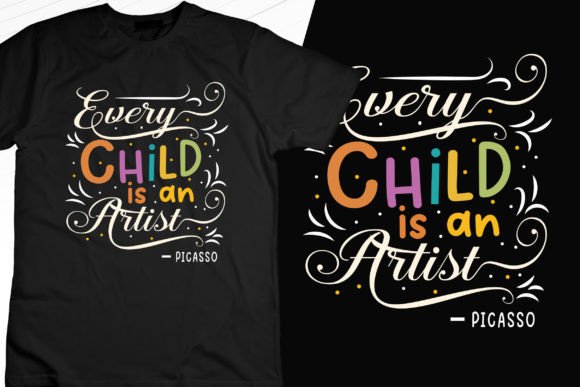
The Every Child is an Artist T-Shirt Design: A Designer's Review
When a new embroidery design lands in my library, my first question is always practical: "Where does this belong?" I look at it not just as a graphic, but as a future physical object—stitches on fabric, a product on a shelf, a gift in someone’s hands. Today, I’m thinking through the Every Child is an Artist Modern T-Shirt design from that exact perspective. Let’s talk about where this design shines, where it needs careful handling, and what kind of real-world projects it’s genuinely suited for.
First Impression: Where Does This Design Live?
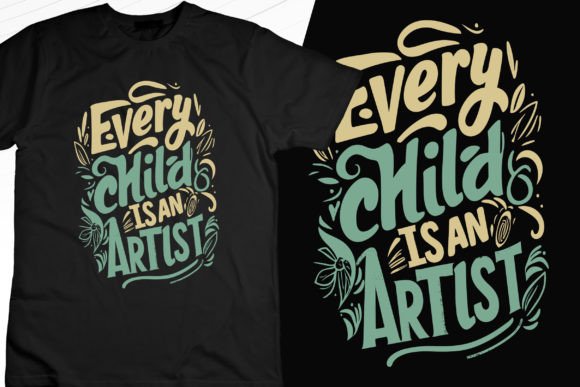
Opening the Every Child is an Artist embroidery file, the mood is immediately clear. It’s playful, optimistic, and modern. The layout feels balanced, with a personality that leans toward the whimsical rather than the strictly formal. This isn’t a corporate logo; it’s a statement. For an embroidery designer, that tells me this design naturally belongs to a specific niche of projects. I picture it on a child’s sweatshirt, a bright tote bag for a creative teacher, or as a sweet, personalized patch on a nursery blanket. The theme celebrates creativity, which makes it a perfect fit for personalized gifts and products targeting parents, educators, or anyone in the arts.
Real-Life Embroidery: Project Matchmaking
In my studio, I’m constantly matching designs to products. Here’s where I’d confidently use the Every Child is an Artist design. Its scale and detail level suggest it’s ideal for medium to larger hoop sizes. Think of it on the back of a kid’s hoodie, centered on a cotton apron for a painting class, or as the focal point on a pillow cover for a craft room. For small business merchandise, like an Etsy seller specializing in teacher gifts or boutique baby clothes, this design adds instant thematic value. It could elevate a simple tea towel into a thoughtful holiday gift for a grandmother.
As a commercial embroidery asset for a shop selling handmade products, it offers a recognizable, feel-good message that customers connect with. Stitched onto a high-quality tote bag or a soft baby blanket, the finished product feels special and intentional, which builds customer trust in your craftsmanship. The visual appeal is friendly and engaging, likely to stop someone at a craft fair and ask, "Where did you get that?"
Where to Approach with Caution
Every design has its limits, and a professional review must be honest. The Every Child is an Artist design, given its likely composition, would need careful consideration on certain projects. If the design contains small lettering or intricate details, these areas could be challenging on textured fabrics like certain knits or on curved surfaces like caps. Stitch density is a key factor; if areas are too dense, it might not perform well on thin or stretchy fabric without the right stabilizer.
I’d be cautious about using it on very small items or in extremely small hoop sizes where detail clarity might be lost. Also, on dark fabric, the thread color contrast must be planned meticulously—a white or light-filled design might need a completely different color palette to pop. Always test first.
Turning a Digital File into a Trustworthy Product
The jump from a digital embroidery file to a finished product in a customer’s hands is where your skill as a maker matters most. Using this design, your choice of fabric, thread, and placement directly affects stitching clarity and the overall handmade presentation. A clean stitch-out on a crisp cotton tee speaks to professionalism, while the same design on a fluffy towel might feel more rustic and charming. For brand consistency, if your shop focuses on modern, minimalist gifts, this playful design might be a strategic accent piece rather than your core product.
Its message inherently boosts giftability. An item embroidered with "Every Child is an Artist" isn’t just apparel; it’s an affirmation. This emotional resonance is a powerful tool for buyer engagement in your Etsy listings or small shop product descriptions.
Practical Notes from the Worktable
Before you run this design, here are my grounded, routine checks. These aren’t speculations; they’re the steps I take with any new embroidery project.
- Test on scrap fabric first. Use the same material you intend for the final product. This reveals how the fill stitches or satin stitches behave and whether any detailed corners need adjustment.
- Check it in black and white. Create a simple mockup on both light and dark backgrounds. This helps visualize the final visual appeal without committing thread.
- Review the actual stitch count and density in your software. Confirm the required hoop size—this is crucial for project planning.
- Consider the fabric texture. A design with fine lines might blur on a linen towel but look sharp on a smooth polo shirt.
- Use proper stabilizer. This is non-negotiable for maintaining clarity, especially on custom apparel like t-shirts or sweatshirts.
- Confirm the licensing. Before selling any finished product or using the design for commercial embroidery, verify the terms. The product category is T-Shirt Designs and type is Graphics, but the specific license for this file must be clear to you.
Embroidery is a translation process—from digital graphic to physical stitches. The Every Child is an Artist Modern T-Shirt design has a strong, joyful voice. In the right project, with thoughtful execution, it can translate into a product that feels both handmade and profoundly meaningful. It’s a design that asks you to consider not just the stitches, but the story you’re stitching into someone’s life.